DownLoad Free Enhanced eBooks
For your iPad and Mac
French Impressionism & Other Countries
Why the color? Not to look pretty, although, but to make the writing more fluid, to make the screen less monotonous, to return to those medieval writers using gold to speak of God and red to evoke Hell or Umberto Eco, closer, for his History of Beauty.
These works are free, but ePub and Pub cannot live without money, the idea is to open up to advertisers whose products echo the content. You will not be exposed to a video or image without explicit references to the historical, artistic or anecdotal context. The English call it Native Advertising, ok, in French let's translate that into an approach worthy of our readership, of the artists whose lives and works we share.
Proust Before Us
I might say that, loving Monet as he does, you could have told him that there was a marvellous Rembrandt not far away, a sublime Raphaël, he would not have raised an eyebrow, whereas if you told him about a river where Monet had done one of his sketches, he would have walked the whole length of it at the same inconvenient hours of the day that Monet painted it, to try to find the exact spot, the better to understand the parts that were real in one of Monet's canvases, or even perhaps what was so interesting and so real about this river that the expression of it creates a precious masterpiece, the better to understand Monet's thoughts upon seeing the thing that motivated him and to experience that from which he drew inspiration, what were the elements he needed so as to solve the problem.
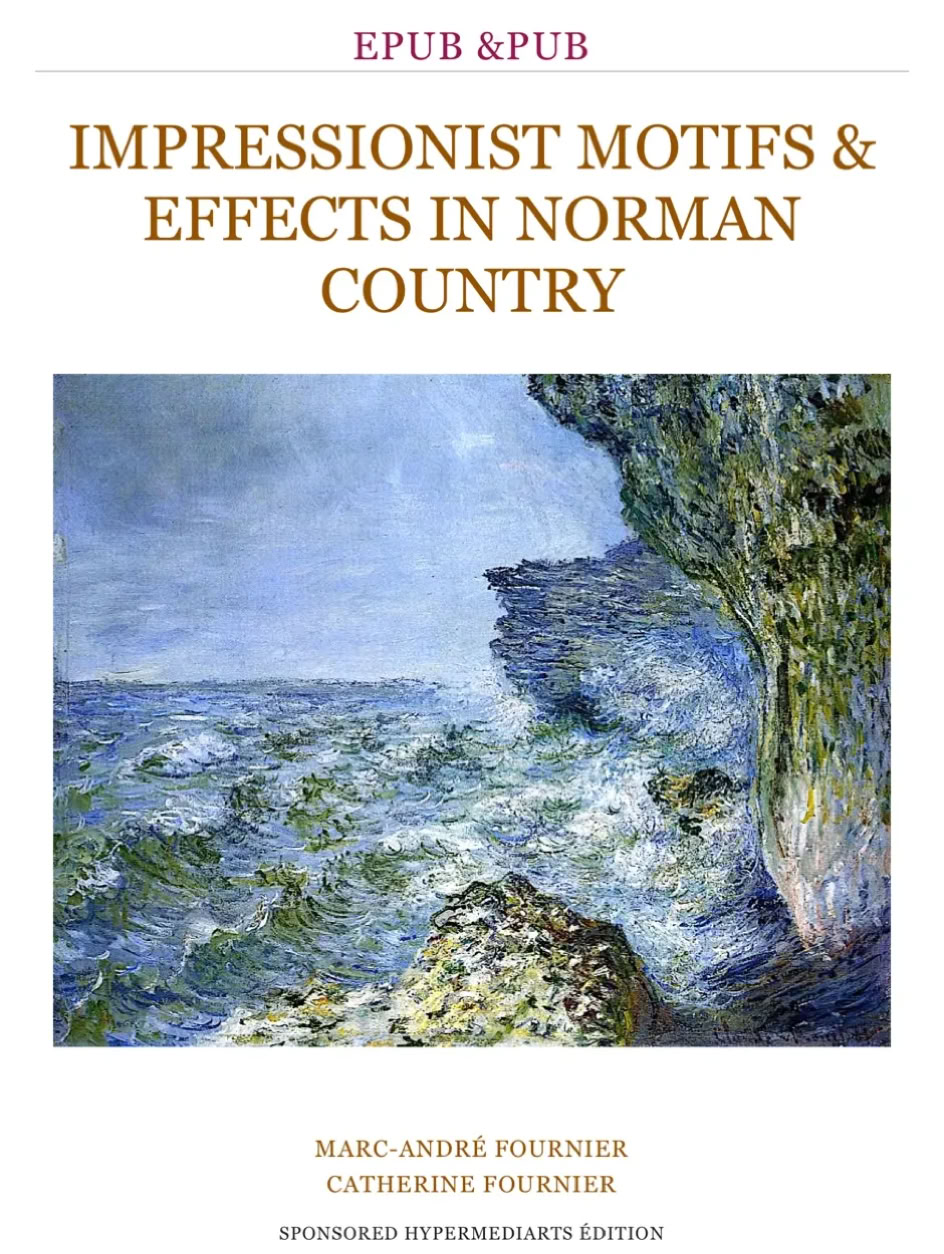
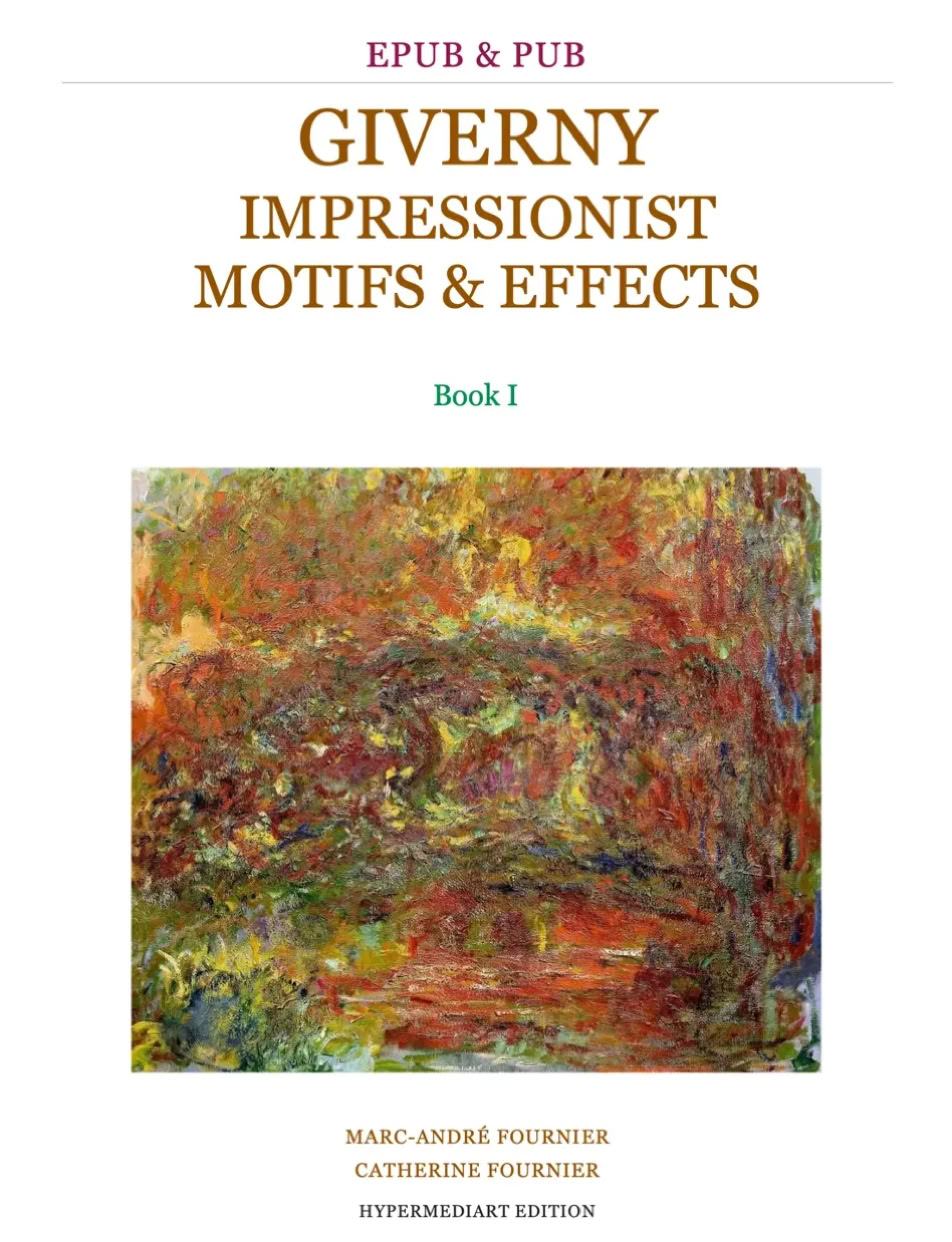
Normandy, Mont Saint-Michel, the D-Day beaches & Impressionism. Which Impressionism are we talking about exactly?
Everyone talks about Monet's garden, about Impressionism, as if it were inherently French and solely French. It's not that simple; we can't ignore the American community that settled in Giverny. We also cannot ignore the existence of Impressionist music and Impressionist literature.
Pease Download or Read This Abstract Leaving
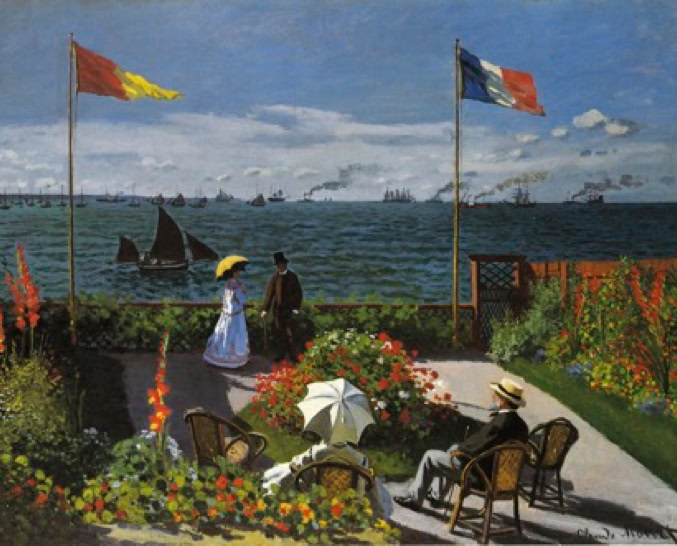
Monet. Terrasse à Sainte-Adresse,1870.
A few steps further on he stopped again, looking out at the harbor. On the right, above Sainte-Adresse, the two electric lights of Cape la Heve, like monstrous twin Cyclops, shot their long and powerful beams across the sea. Starting from two neighbouring centres, the two parallel shafts of light, like the colossal tails of two comets, fell in a straight and endless slope from the top of the cliff to the uttermost horizon. Then, on the two piers, two more lights, the children of these giants, marked the entrance to the harbour; and far away on the other side of the Seine others were in sight, many others, steady or winking, flashing or revolving, opening and shutting like eyes the eyes of the ports yellow, red, and green, watching the night-wrapped sea covered with ships; the living eyes of the hospitable shore saying, merely by the mechanical and regular movement of their eye-lids: "I am here. I am Trouville; I am Honfleur; I am the Pont-Audemer river." And high above all the rest, so high that from this distance it might be taken for a planet, the airy lighthouse of Etouville showed the way to Rouen across the sand banks at the mouth of the great river.
Pierre et Jean / Peter and John.
(trans. Clara Bell)
Maupassant chose to bury his head in the sand so as not to see the inexorable mutation the city was going through. The writer of a 1855 guide would not show the same inhibition: Sainte-Adresse, which will soon become nothing more than a very busy quarter of Le Havre, is a lovely village; it is still blessed with all the allure of solitude, silence and oceanic contemplation, although for the past few years its charming valley is gradually being overtaken by small houses, gazebos, pavilions and lodges, preparing, one brick at a time, the hour of its imminent transformation.
For us, Sainte-Adresse is above all The Chinese painting with flags in it. The famous terrace there marks a blessed time: I have been in the family for two weeks now, and I am still as happy and feeling as good. Everyone is charming to me and admires each of my brushstrokes... I have a lot to work on: twenty or so canvases, which are coming along fine, with stunning seascapes, figures and gardens...
Bazille, his long-standing friend and fellow-painter, could only be delighted with this serene atmosphere.
It was also a place of learning with Eugène Boudin: One day we were at Saint-Adresse together and had set up our easels in the shade of a tent out of the sun, when a respectable, and to all appearances very grand, gentleman came up to us. He congratulated us on our bold approach and declared that nature, the open air and high-keyed painting were bound to bring about a renewal in the art of painting. He shook our hands on leaving, with the words 'I am Theophile Gautier, the poet who almost became a painter.'
Yet there were darker days to come. War and death for his young friend Bazille, rejection from an over-conventional family, and poverty for Claude Monet: You want to know about my situation and how I have been living for the past week?... Ask Renoir, who brought us some of his bread so that we wouldn’t die [the painter, his young bride and their newborn].
But there were also happier days, as described by the nephew of a tenant at Monet’s family house, which was large enough to be divided into apartments, and was situated in Ingouville, north of Le Havre: Mr Monet, his wife, an exceptional singer, and their two sons, including their second-born who, although he was then called Oscar, became famous as Claude Monet... I enjoyed this short holiday very much. With walks and bathing during the day, and improvised concerts and dances in the evening, everything contributed to the cheerfulness of the house, in which the hosts were inclined to enjoy life at its fullest.
On some days, the sun was inviting and the sea beautiful, perfect for running along the cliffs in the open air, or for splashing around in the water.
On those days, the Moulin de la Galette painter invited his friends to join him: [Bazille] My dear friend,
Mr Henri [Alfred] Sisley, little Grange [one of Manet’s yound models], whom you met at our dinner, and I, will be leaving for a long-distance journey on a sailboat this Thursday. We will stop in Le Havre to see the regattas. We intend to stay there for ten days and the overall expense will be about fifty francs. It would give me great pleasure if you would join us. There is still room for one on our boat. I will be bringing along my box of colors to make sketches of the places I like. I believe it will be highly enjoyable. Nothing to keep us from leaving somewhere unpleasant, and nothing to keep us from staying anywhere we might find entertaining. Very frugal meals. If you decide to come, I will give you the preliminary details of what we intend to do. We have made a very close estimate of necessary spendings. We will have the boat towed to Rouen by the Paris and London, and then we will be free to do whatever we please. Don’t make a big fuss out of it if you have to refuse. I would of course be very happy to count you among us, but please consider this invitation a simple offer. I thought that you might be pleased to see the places that you stayed in and found beautiful – this is why I thought of you. It is no big deal, please do not feel you have to agree. Only send an answer.
Your friend,
Things seemed a little more complicated for Pissarro, although enthusing about the motif: We have made the rounds - by carriage - with one of my collectors, Monsieur Van der Velde, toured the city and its outskirts, and gone through Sainte-Adresse. It is really very beautiful, but I hardly think I could find a place with a window from which to work.